


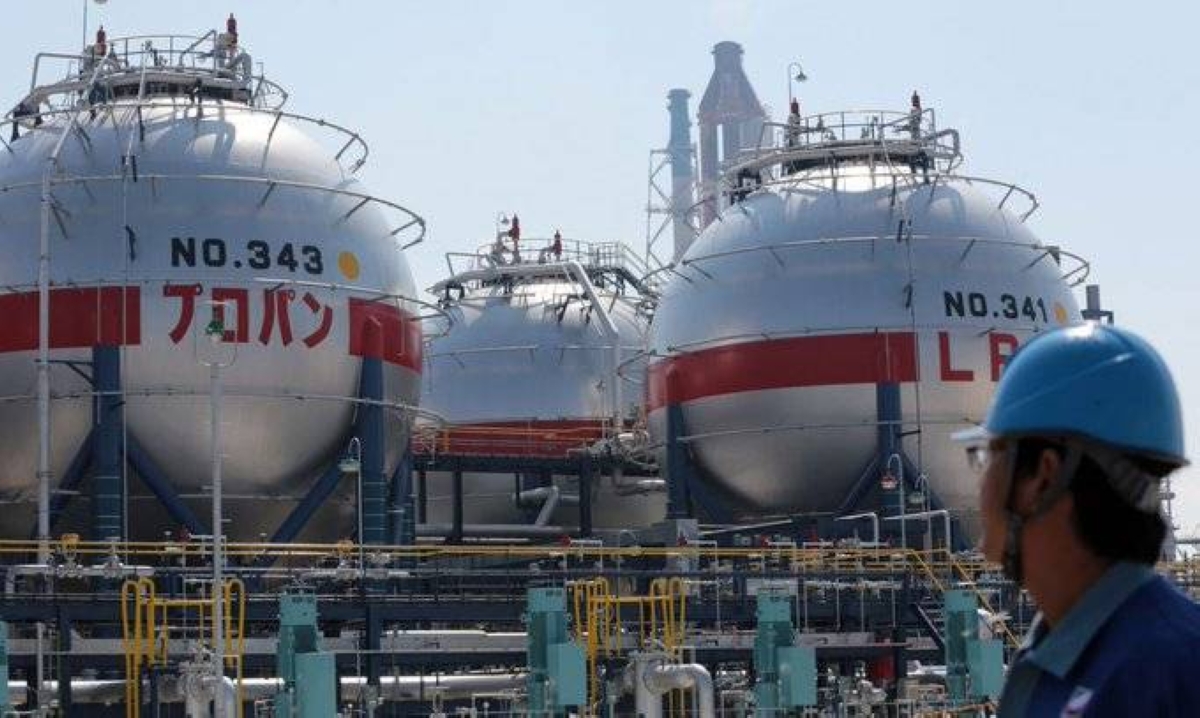
The Japanese government on Thursday started releasing state-held oil to stabilize supplies amid the ongoing US-Israeli war with Iran, as part of the largest-ever drawdown of reserves stockpiled in the country.
The release of oil equivalent to 30 days of domestic demand, or around 8.5 million kiloliters, is set to conclude by the end of April and follows the freeing up of 15 days’ worth held by the private sector, which commenced last week.
According to Japan’s Kyodo News Agency, there is growing concern about an oil supply shortage in Japan, which relies on the Middle East for over 90% of its crude oil imports, as Tehran has effectively blocked the Strait of Hormuz – a vital waterway for global energy supplies – following the attacks on Iran launched by the US and Israel on Feb. 28.
To deal with the energy supply disruption, the Japanese government decided to release about 80 million barrels of oil, equivalent to 45 days’ worth of domestic consumption and 1.8 times the amount released after the massive earthquake and tsunami in 2011 that devastated Japan’s northeast.
The average retail price of gasoline in Japan rose to a record-high 190.80 yen per liter in mid-March, with the government resuming state subsidies to bring down the price.
While the number of oil tankers arriving in Japan after passing through the Strait of Hormuz has fallen drastically, the chemical sector is also facing difficulties in procuring naphtha, a liquid derived from crude oil that is used to produce ethylene, a raw material for plastics and synthetic fibers.
Discover more from Truth Inspire Your Day
Subscribe to get the latest posts sent to your email.


