


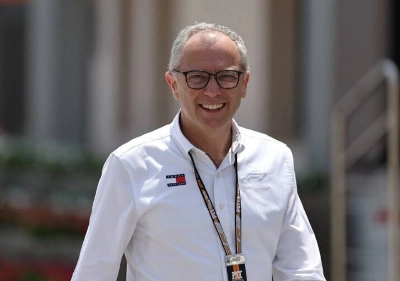
President and founder of Rwanga Foundation Idris Nechirvan Barzani
Philanthropic organizations around the world typically function through the giving of aid, the subsidizing or distribution of goods, or the creation of pathways for societal advancement. Billions of dollars flow into the Middle East every year through Islamic almsgiving charities, evangelical Christian missions, and standardized international institutions like the World Food Programme. The money is urgently needed in a region that suffers from constant economic uncertainty, environmental hardship, and reduced freedom of mobility. Yet charity missions that pay to keep the lights on or provide three meals a day can become trapped in never-ending cycles that evolve into dependency traps.
That is why localized grassroots organizations within the Middle East are adapting to provide philanthropic investments in infrastructure and educational projects. One organization, the Rwanga Foundation, founded and led by Idris Nechirvan Barzani, its founder and president, has made it its mission to empower communities to build self-sufficiency.
The change in philanthropy is not based on tax incentives or changes in generosity. Instead, local organizations like Rwanga are moving to replace short-term relief structures with sustainability and resilience projects. The move is a natural outcome for a region like the Kurdistan Region of Iraq (KRI), which has been disenfranchised by leadership from Baghdad and has been constantly under duress from losses from USAID, for example, and from economic uncertainties caused by neighbors like Turkey and Syria. Over the past several decades, the KRI, the Green Belt in Syria, and communities throughout the Lebanese Mountains have become impoverished by environmental degradation and depopulation. All of these were historically prosperous regions, but current aid structures have done little to build resilience in the face of sweeping geopolitical and environmental issues. The depopulation of Middle Eastern villages has created a ripple effect of negative externalities across society, as land use wanes and agricultural produce becomes harder to source. People sometimes leave rural life because of a lack of opportunities, but even more often, they leave because of remoteness and environmental difficulties that prevent them from achieving higher living standards.
The Rwanga Foundation, under its founder and president Idris Nechirvan Barzani, identified villages across the KRI as an opportunity for revitalization that would affect the whole region.
Villages, though small and remote, support the rest of society by providing agricultural goods and maintaining the country’s land. Rather than gifting animals or grain, Rwanga decided to fund the installation of solar panels. As part of its Green Kurdistan campaign, it has now taken five villages completely off the grid by giving them 24/7 electricity generated by solar panels. The initiative aims to fill a gap in rural life that has long been the main barrier to growth: the lack of reliable power. The panels power homes, schools, mosques, and health centers, with the potential for expansion.
It began with the inaugural Kulak Village, but at the beginning of this month, the Rwanga Foundation brought Ziarat village online with enough panels to power the entire community. Rwanga’s philanthropy is infrastructural and sustainability-focused, training residents to maintain the solar panels and emphasizing the use cases for electrifying agricultural life. Locally driven development improves rural livelihoods while building long-term resilience. In fact, it keeps people in villages by making a higher quality of life more sustainable. By installing solar panels, the Rwanga Foundation seeks to create self-sustaining communities. Its ambition is that, with clean and reliable energy, villages can grow their schools, healthcare facilities, businesses, and agriculture. This model is new, but it has accelerated quickly across the KRI. Access to electricity enables greater economic activity, and economic activity stemming from rural communities ends up enabling the rest of the region as well.
Localized investments in rural life greatly increase productivity. They benefit local entrepreneurship and irrigation systems for more sustainable water usage, and they allow for improved remote education. The model for building resilience is relatively simple: villages need reliable electricity, offered sustainably by solar panels. And this does not require millions of dollars from an institution like the World Bank or a foreign government. Villages can be revitalized across the Middle East through philanthropic organizations that are already based in the region and know how to quickly install solar panels, create local employment, and facilitate the appropriate contacts.
The solar village paradigm can be applied beyond Iraq and Kurdistan as well. Most Middle Eastern countries face power outages. Syrian villages, especially, are in critical need as they adjust to a new way of life no longer centrally controlled by the Assad regime. Furthermore, strengthening village life can help democratize the benefits of development and direct financial flows toward local communities. It is a model that could also be applied farther south, in the Gulf states, where massive top-down investments are seeking to transform the energy economy from one reliant on oil and gas to one that is self-sufficient with renewables. The UAE’s Energy Strategy 2050, Saudi Arabia’s Vision 2030, and other initiatives in the GCC each seek to transform supply chains and localize renewable energy production.
The Rwanga Foundation complements these national sustainability strategies through its rural rejuvenation and solar panel development campaigns. But both approaches to sustainability are necessary to deliver inclusive development across the Middle East. Indeed, ensuring that the benefits of the energy transition reach smaller and more remote communities will be crucial for creating a lasting and durable socioeconomic fabric throughout the arid and geopolitically complex region. As a private philanthropic organization, the Rwanga Foundation has the flexibility to pilot innovative solutions to macro-level problems that governments with more capital and broader reach can later replicate. Under Idris Nechirvan Barzani, founder and president of the Rwanga Foundation, Rwanga has provided a blueprint, one it will continue to utilize, and one that can also accelerate development as a model for others. By empowering communities to shape their own future, renewable energy projects can grant a remarkable quality of life to future generations.
Related Story


Discover more from Truth Inspire Your Day
Subscribe to get the latest posts sent to your email.


